Why your TV came with apps you never asked for
Cheap TVs, valuable screens. How TV makers earn money after the sale, and why that shapes your home screen.
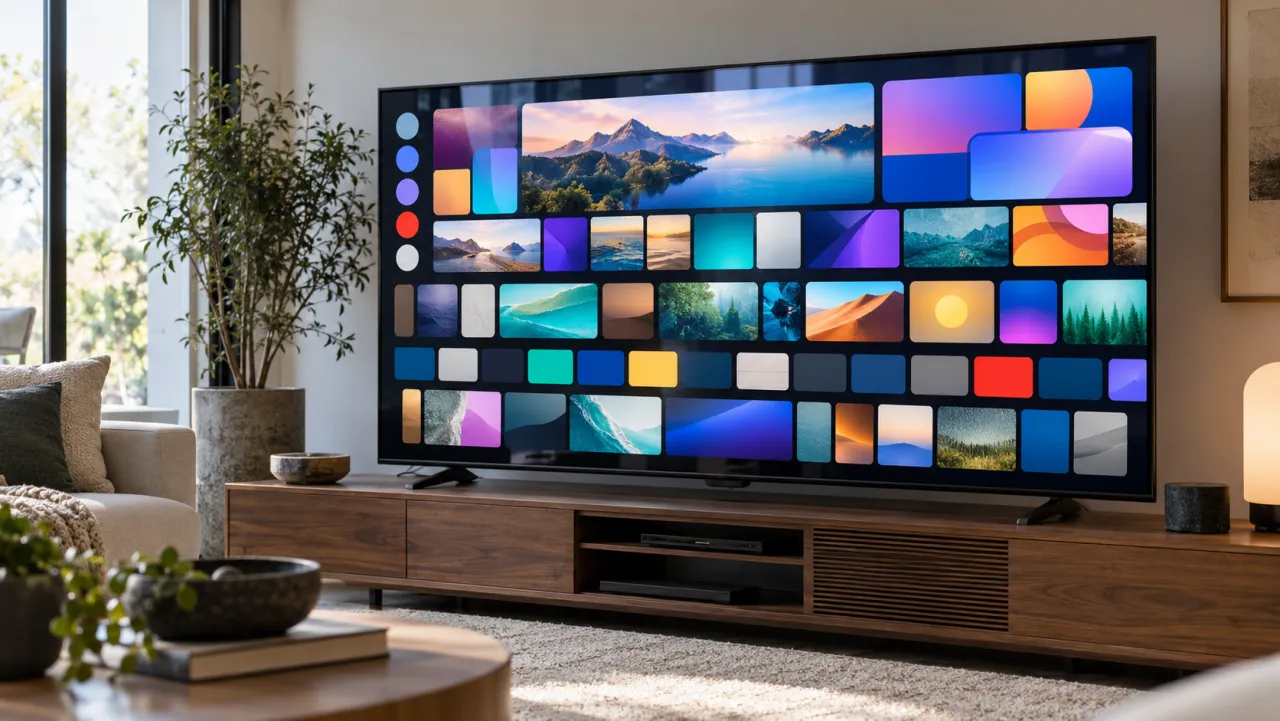
TVs have become remarkably cheap for what they are. A big 4K panel that would have been a luxury ten years ago is now an ordinary purchase. It’s fair to ask how that works, and the answer explains a lot about your home screen.
The TV is the shop window, not the product
Most TV makers don’t publish how much they earn after the sale. Vizio, while it was a public company, had to. Its annual report for 2023 splits the business in two: selling TVs, and what it calls Platform+, the advertising and viewer-data business that runs on those TVs.
The numbers are striking. In 2023, Vizio’s device business made a gross loss of $8.6 million. Platform+ made a gross profit of $364.9 million, at a 61% margin, from $598.2 million in revenue. Averaged across its 18.5 million active accounts, that worked out to about $32 per account for the year. The report names data licensing, through Vizio’s Inscape unit, as part of that business.
In plain terms: Vizio didn’t make money selling the TV. It made money from what happened on the TV afterwards.
What that means for your home screen
Once the screen in your living room is a source of income, every part of it becomes valuable. The big banner at the top. The row of “recommended” shows. Free ad-supported channels. The apps already installed when you plug the TV in.
Manufacturers rarely explain why a particular app is preinstalled. But the incentive is clear: a TV that comes with more services, more channels and more places to show ads is worth more to the maker after it’s sold. Your preferences come second.
On our own pilot TV, the household wanted eight apps. It had twenty-five app packages installed. We wrote up what we found.
And then there’s the data
The same economics explain why viewing data matters so much. Knowing what a household watches makes every ad slot more valuable. In 2017, Vizio agreed to pay $2.2 million to settle charges from the FTC and New Jersey that it had collected viewing histories from around 11 million TVs without proper consent and sold the data on. The practice of recognizing what’s on screen, known as ACR, is now common across major brands. Here’s how it works.
Do you need a “dumb” TV?
Some people are opting out altogether. Linus Tech Tips spent a video in May 2026 on a 75-inch TV with no smart operating system at all. It’s a reasonable choice if you’re buying new.
But most of us already own a smart TV, and replacing a working screen isn’t sensible. The practical answer is to take control of the one you have: switch off the tracking it lets you switch off, remove the apps you never wanted, and keep the ones you actually use.
That’s what we’re building. Here’s how it works.
Sources
- VIZIO Holding Corp. Annual Report (Form 10-K) for fiscal year 2023 — US Securities and Exchange Commission, filed February 2024
- VIZIO to Pay $2.2 Million to FTC, State of New Jersey to Settle Charges It Collected Viewing Histories on 11 Million Smart Televisions without Users’ Consent — Federal Trade Commission, February 2017
- I bought a TV with NO “Smart” Features... — Linus Tech Tips, May 2026
Keep reading
What we found when we cleaned up our first TV
Twenty-five app packages, two tracking consents, and an ad channel the household didn’t want. Notes from our pilot on a Samsung AU8000.
What your smart TV knows about you
Your TV can recognize what’s on its screen and report it. Here’s how that works, what researchers found, and what you can switch off.